

Museum Gift Shop Jewelry is Getting Good
Bonafide fine jewelry pieces—crafted by talented independent designers—are making their way into prestigious institutions.
BY AMY ELLIOTT
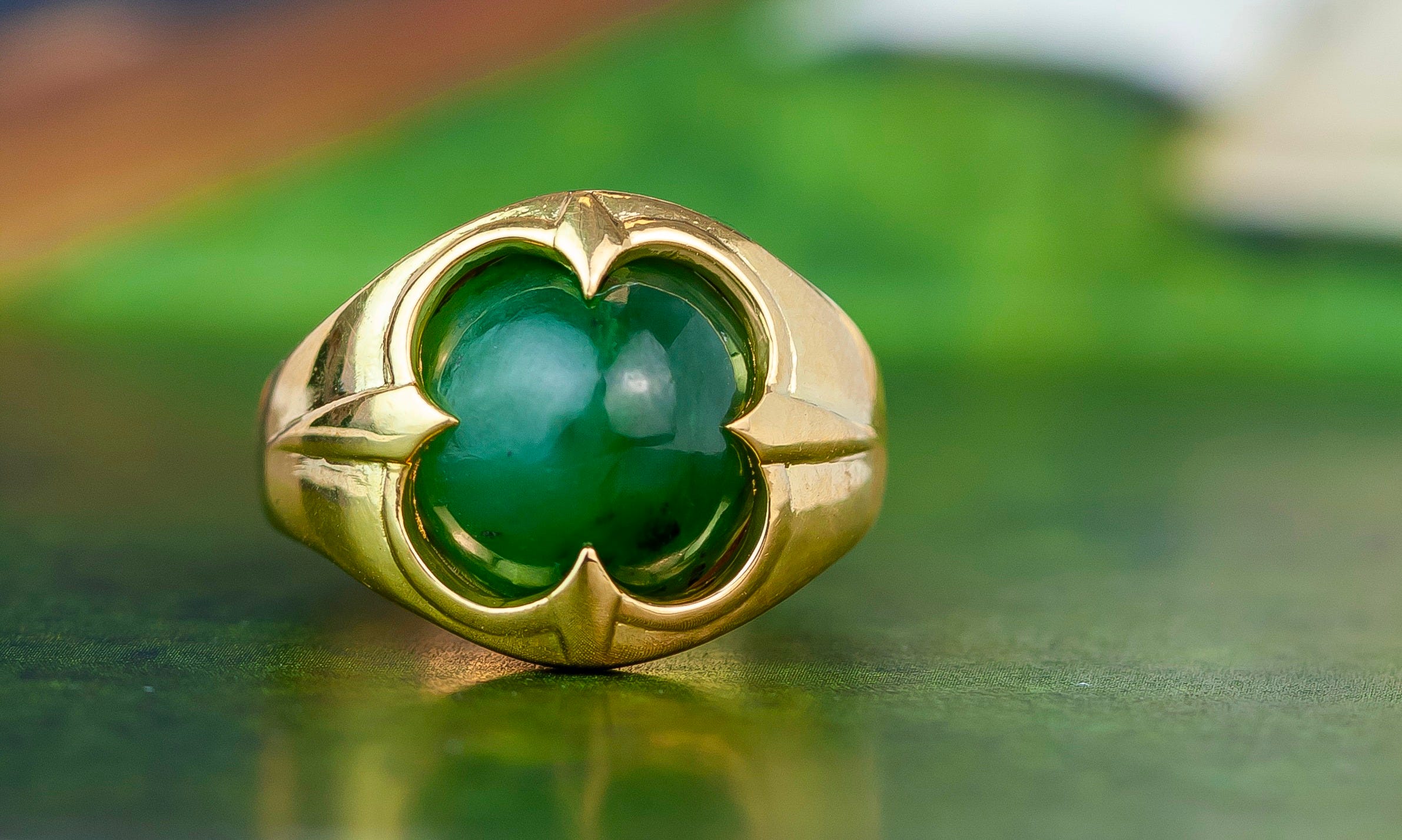
If your summer travels are taking you to a major U.S. city, a museum visit may already be on your itinerary. Just don’t forget to pop into the gift shop—especially if there’s jewelry twinkling among the magnets and postcards.
Your options may look a little different than what you expect.
The bulk of the jewelry in most museum gift shops a decade and more ago was in the vein of brass cuffs decoupaged with Tiffany-window imagery and replicas of Renaissance rings set with glass stones. The pieces definitely lived in the costume jewelry world—think enamel medallions adorned with medieval Celtic crosses or clip-on earrings crafted with high-relief Hellenistic lion heads. Base metals and “gold tone” were the norm.
Over the last five years, there has been a pronounced shift in what the term “museum gift shop jewelry” entails, with several institutions pursuing collaborations with accomplished goldsmiths, buzzy designers, and studio artisans.
The latest example pairs the talents of New York City-based jewelry designer and goldsmith Donna Distefano with the Frick Collection in New York. When the museum re-opened its doors last fall after a lengthy period of renovations, Distefano’s Off the Canvas collection was one of the premiere features of the museum’s refurbished gift shop. Crafted in 22k gold with genuine gemstones, diamonds and pearls, the 26-piece series was inspired by a selection of artworks from the Frick’s permanent collection.
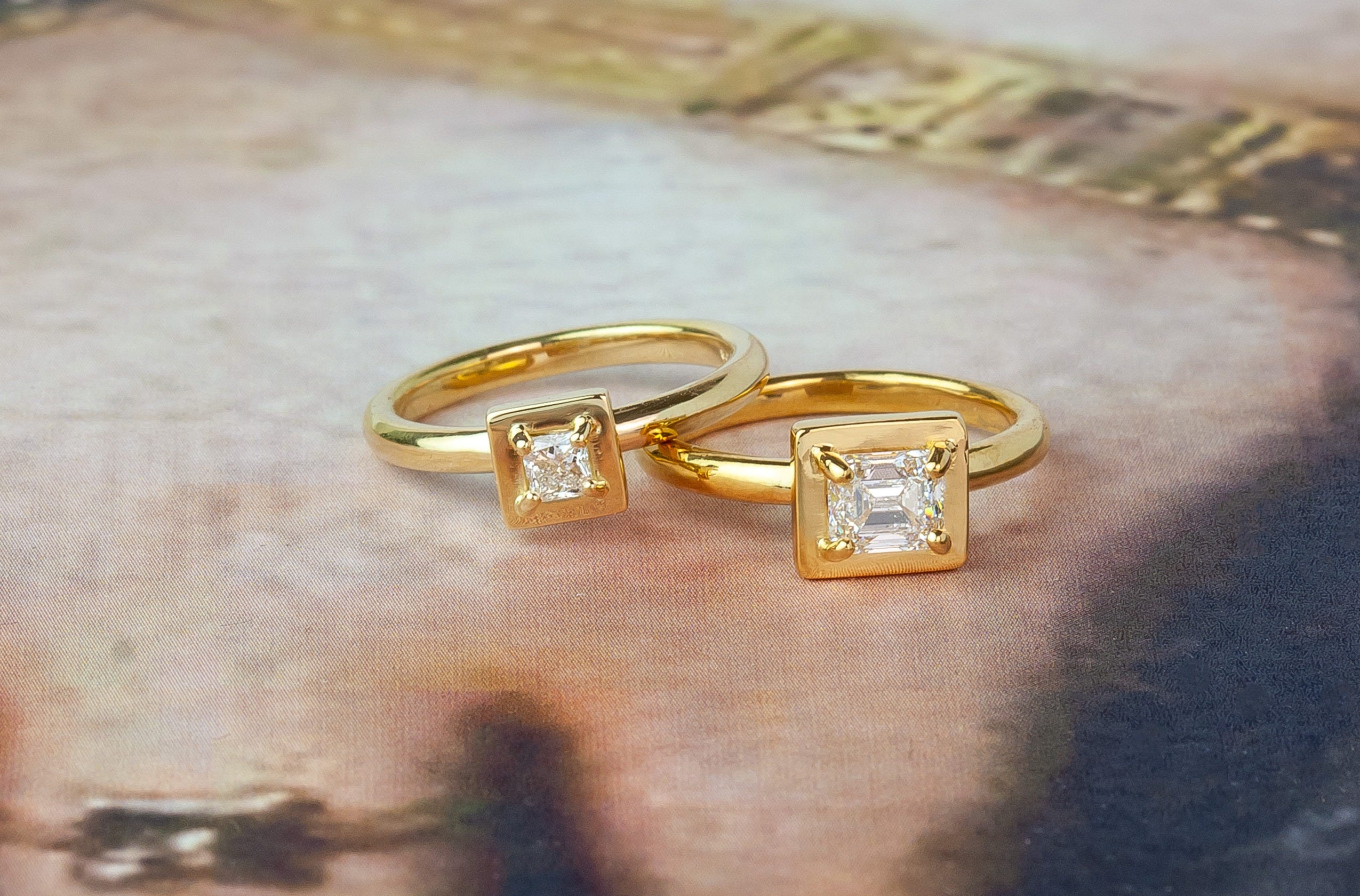
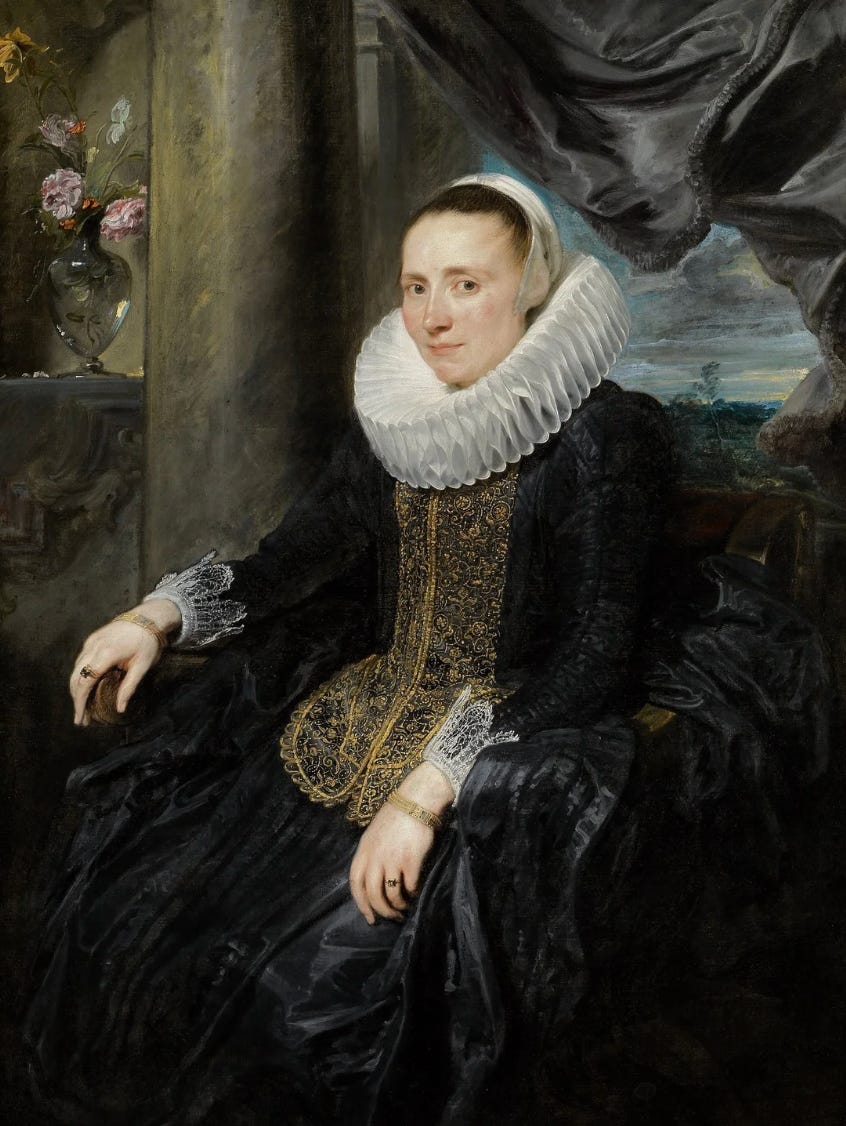
“So many interpretive and artistic ideas are required even during the technical process of jewelry making,” says Distefano, a master goldsmith who spent the early part of her 35-year career crafting fine jewelry pieces for the reproduction studio of the Metropolitan Museum of Art (The Met). For example, each of the Frick pieces started as a hand-painted rendering: “The interpretation of visual into metal is art; it’s very much like a writer’s ekphrasis of a painting.”
Banners illustrating how Distefano’s designs connect to the masterpieces appear alongside the jewelry in the shop. Inspiration points include actual depictions of jewelry, such as a gold bracelet seen in Anthony van Dyck’s painting “Margareta de Vos,” pearl earrings worn by the subject of “Portrait of a Woman by Moroni,” or a signet ring set with a green stone that is visible in “Portrait of Thomas Cromwell” by Hans Holbein the Younger.
Other inspirations are more oblique, including the hem of a tunic in Saint John the Evangelist by Piero della Francesca, which guided the design of a single shoulder-duster earring, or a pin that mirrors the rose in “Sarah, Lady Innes” by Thomas Gainsborough.
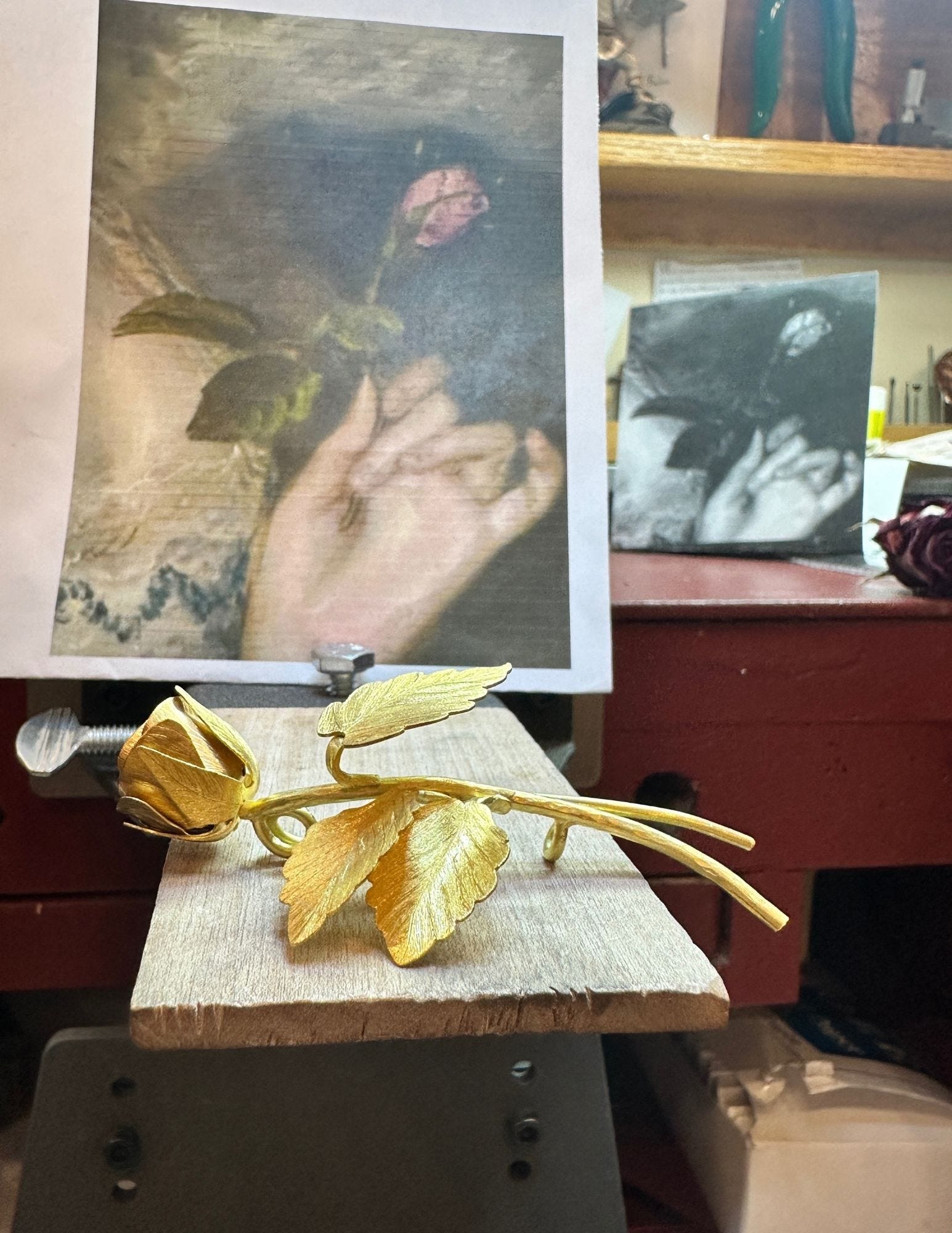
“As an artist, I am constantly seeking to elevate my approach,” says Distefano. The Frick collaboration, she adds, is particularly rewarding, “because the patrons that I’ve met have been like oxygen to my creativity. They understand art and jewelry history.”
Around 2020, the product development team at the Met Museum’s store may have had exactly this type of patron in mind when they introduced a series of collaborations with New York makers in honor of the Met’s 150th anniversary.
One was a capsule with Catbird, a Brooklyn-based jewelry store and brand known for pioneering the alternative engagement ring trend in the early 2000s. Two subsequent collaborations followed, including a capsule inspired by paintings in the Met’s collection, and a second that was linked to the 2024 Costume Institute exhibition, “Sleeping Beauties: Reawakening Fashion.”
“Jewelry, or depictions of jewelry, are housed in each of the museum’s 19 curatorial departments,” explains Morgan Pearce, the Met Store’s general manager of marketing, brand partnerships, and licensing. “Similarly, jewelry—fashion, demi-fine, and fine—has been one of the top-performing areas of The Met Store business for nearly 150 years. Over that period, there have been so many creative approaches taken to translating historic jewels into modern wearables.”
The collaboration model, however, has expanded the aesthetic possibilities of what museum gift shop jewelry can be. And unlike some costume jewelry, precious materials automatically elevate the quality—and extend the relevance—of the product.
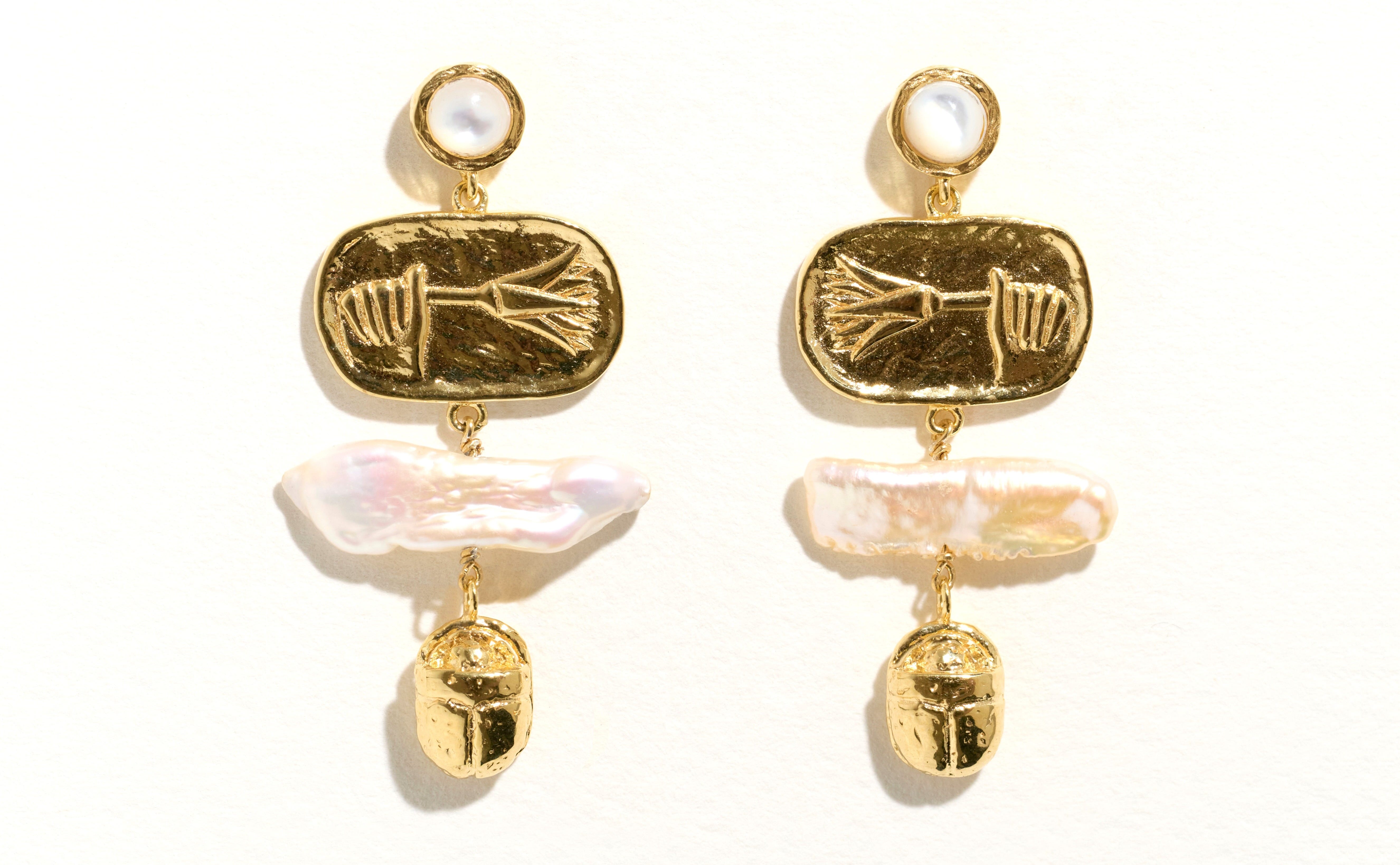
Recent Met Store examples include a capsule with the New York-based jeweler Ten Thousand Things to mark the opening of the museum’s Afrofuturist Period Room. There was also the Heirloom Project in 2022, which highlighted the work of jewelers Silvia Furmanovich, Hanut Singh, and Munnu The Gem Palace for the 10th anniversary of The Met’s reimagined Islamic galleries. Two collaborations with the New York-based designer J.Hannah are also part of the Met Store’s jewelry collaboration portfolio; the most recent, Subjects of Adornment, debuted last fall and draws on the themes and details seen in four of the museum’s European portraits. And earlier this year, the Met Store partnered with Brooklyn-based designer Pamela Love on a capsule inspired by Egyptian art.
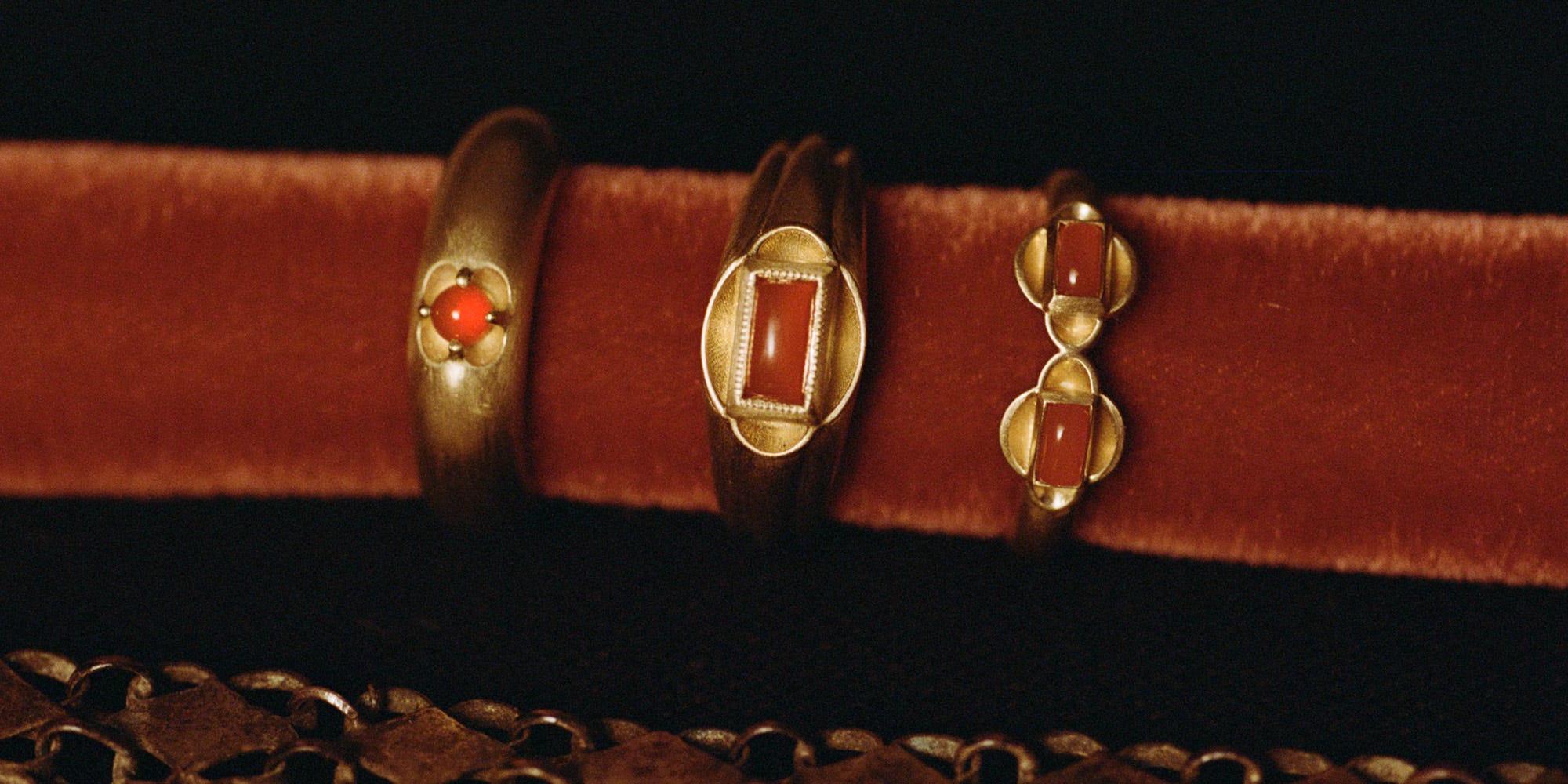
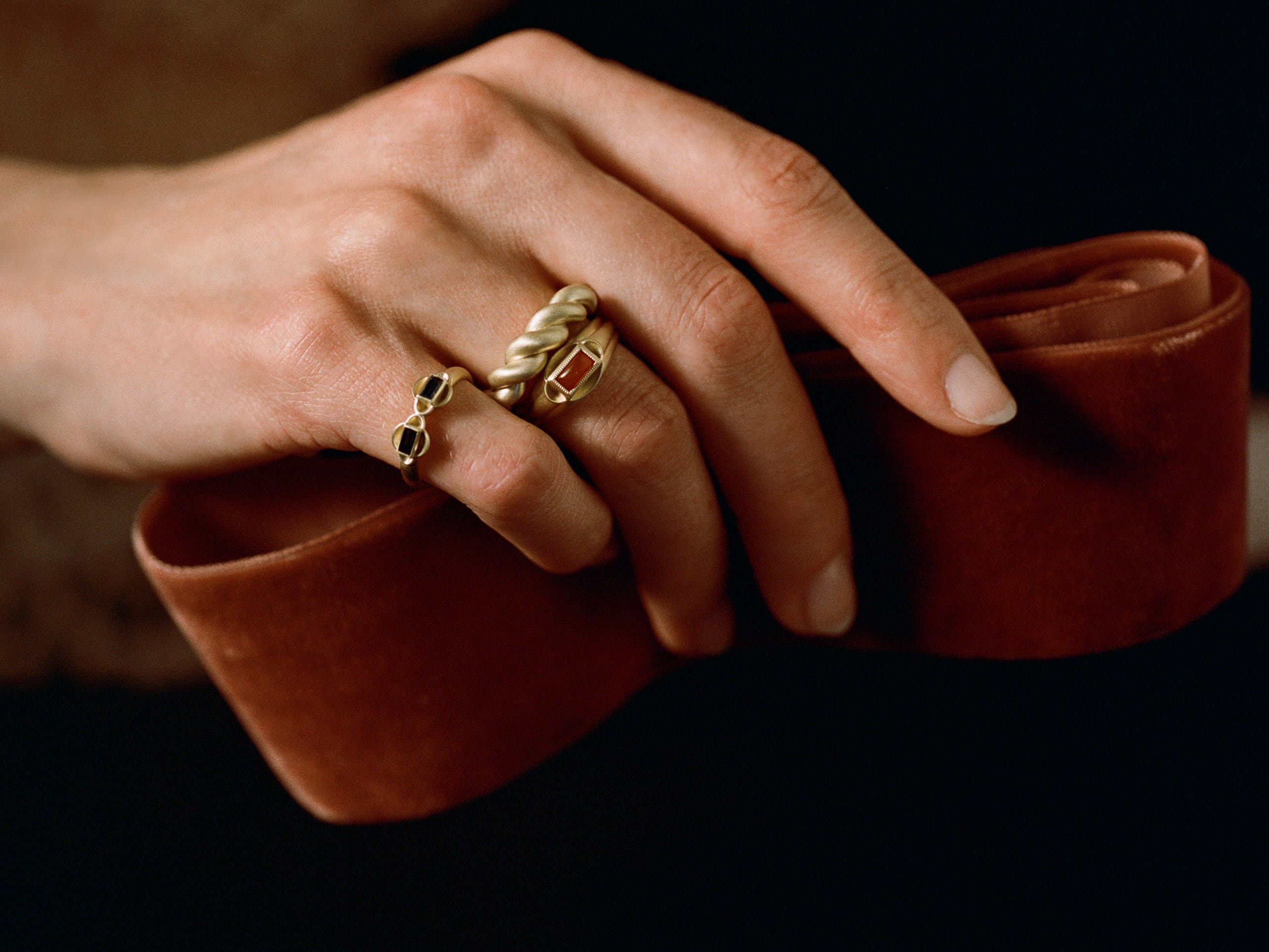
Pearce has been leading on Met Store collaborations since 2019. “My overarching goal is to offer museum visitors and art lovers unique ways to celebrate their love of art through product,” she says. “From a practical perspective, collaborations allow us to introduce unique art-inspired designs in categories we might not develop ourselves. Because the fine jewlery category requires immense expertise, credibility, and craft, it lends itself perfectly to collaborations, allowing us to engage a new audience with a range of voices, creative perspectives, and styles.”
The proven success of the Met Store’s jewelry collaborations may be what has prompted the merchandising and product development teams at other museum gift shops to embrace a similar approach.
The Frick’s collaboration with Distefano is part of this broader trend, as is the Museum of Fine Arts, Boston (MFA), which launched a limited-edition collection with jewelry designer Monica Rich Kosann last year. It consisted of three charm necklaces inspired by the swords used by Japanese samurai in the 18th and 19th centuries, which are a highlight of the MFA’s permanent exhibitions.
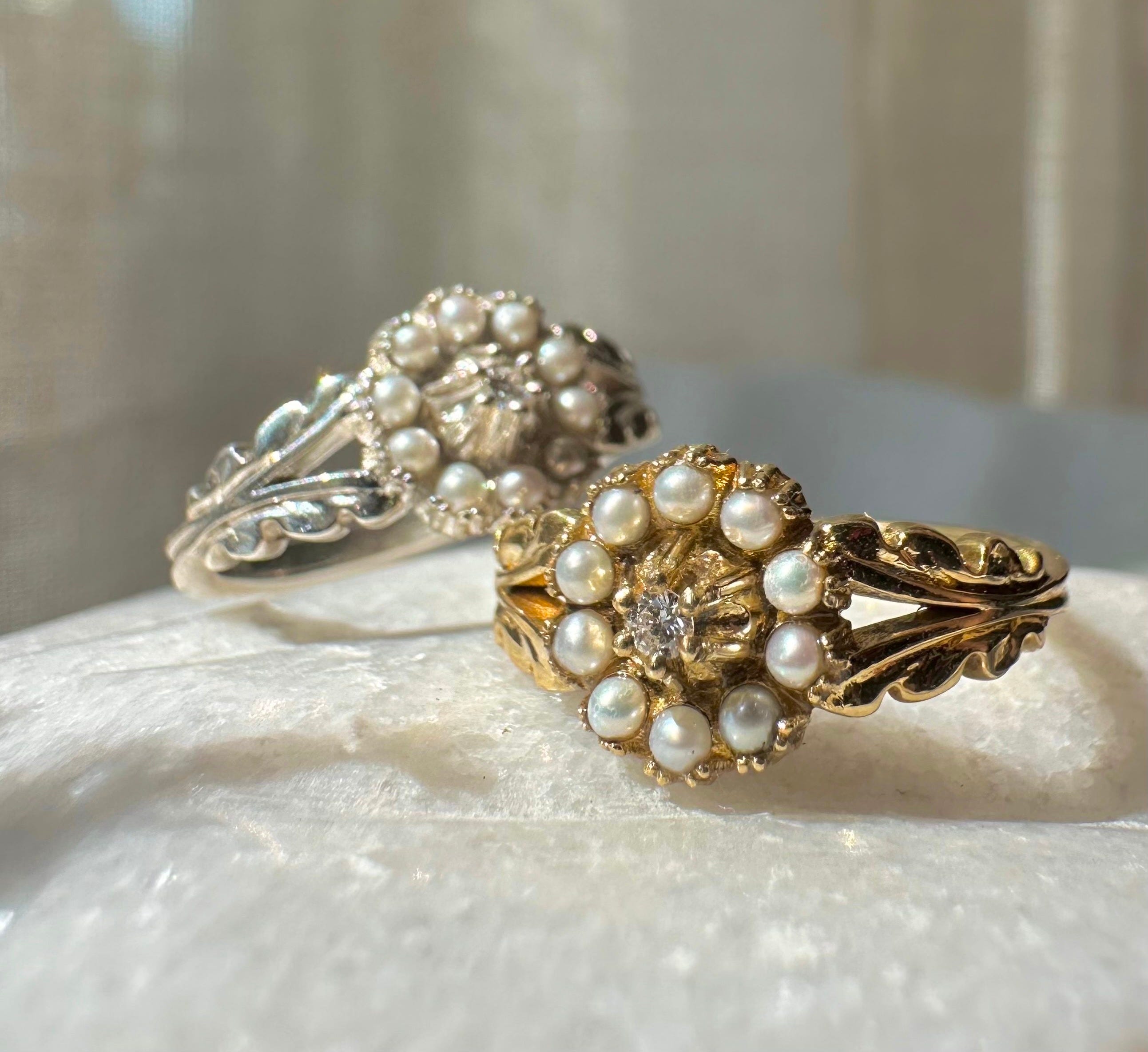
The Peabody Essex Museum (PEM) in Salem, Mass., recently commissioned local jewelry designer Jenni Stuart to recreate Victorian-era friendship rings inspired by those owned by Elizabeth Ropes Orne, a Salem heiress who lived in the historic Ropes Mansion, now operated by the museum.
“Jewelry is a bookmark for the mind—it is a touchstone of an experience, and I think that’s what people are looking for,” says Victor Oliveira, director of merchandising.
According to Oliveira, some museum stores source merchandise through a concessionaire that supplies a number of other museums in similar fashion (think: logo T-shirts, pens, and keychains). Those products are generally part and parcel of souvenir shop concepts. But when a museum store is intentional about collaborating with independent jewelry designers, it becomes an opportunity to positively impact local economies: “When we deal with vendors that we know, we can visit their studios,” he says. “We know their process.”
Patrons are also interested in buying products that are from the region. “They want to know more about where the product is from and where it’s made. That’s a new trend—and they ask those questions of jewelry more than any other category in the shop.”
From there, he says, staff can turn those questions into a storytelling exercise, encouraging patrons to “use museums for what they are—points of inspiration.”